


Harnessing the Potential of LoRa Mesh Networks and Low-Power IoT Solutions

As the Internet of Things (IoT) ecosystem keeps growing, technologies such as LoRa mesh networks and LoRaWAN are playing an increasingly crucial role. Providing scalable, energy-efficient wide-area network communication, these solutions enable resilient mesh networking and offer budget-friendly IoT deployment options. This article explores their benefits, adaptability, and how they integrate into IoT applications.
Understanding LoRa and Its Role in IoT
Delving into LoRa as a physical radio communication method reveals a technology distinctly suited for the Internet of Things (IoT) environment. Utilizing spread spectrum modulation, LoRa allows devices to exchange data efficiently across long distances while consuming very little power. This ability is revolutionizing various sectors through its use in LoRaWAN, a network protocol specifically designed for IoT networking protocols.
Take precision farming technology as an example—LoRaWAN simplifies the tracking of soil moisture, climatic conditions, and crop vitality, empowering farmers to make informed choices that boost productivity. Asset monitoring also benefits from LoRa; organizations employ it to track the whereabouts and conditions of critical assets over large regions without needing frequent battery replacements.
The real strength of LoRa comes from its capacity to link devices over several kilometers, substantially cutting down energy use. This feature paves the way for numerous applications, ranging from industrial Internet of Things connectivity to environmental monitoring. Thanks to enabling smart devices to function independently for years on compact batteries, LoRa mesh network advantages establish it as a foundational element for sustainable and cost-efficient IoT systems. As we explore its uses, the LoRa mesh network advantages promise to redefine connectivity in today’s increasingly digital landscape.
The Scalability of LoRaWAN Networks
LoRaWAN networks are engineered to efficiently support a vast number of devices while maintaining low energy consumption. Utilizing a star-of-stars design, numerous end nodes connect to a central network server through gateways. This structure guarantees minimal energy usage per device, making it perfect for IoT solutions demanding extended battery longevity. Managing communications across the network, the LoRaWAN protocol handles data flow while ensuring both reliability and scalability. By leveraging dynamic data rate LoRaWAN techniques, it fine-tunes power output and data transfer speeds for each device, maximizing efficient use of the spectrum.
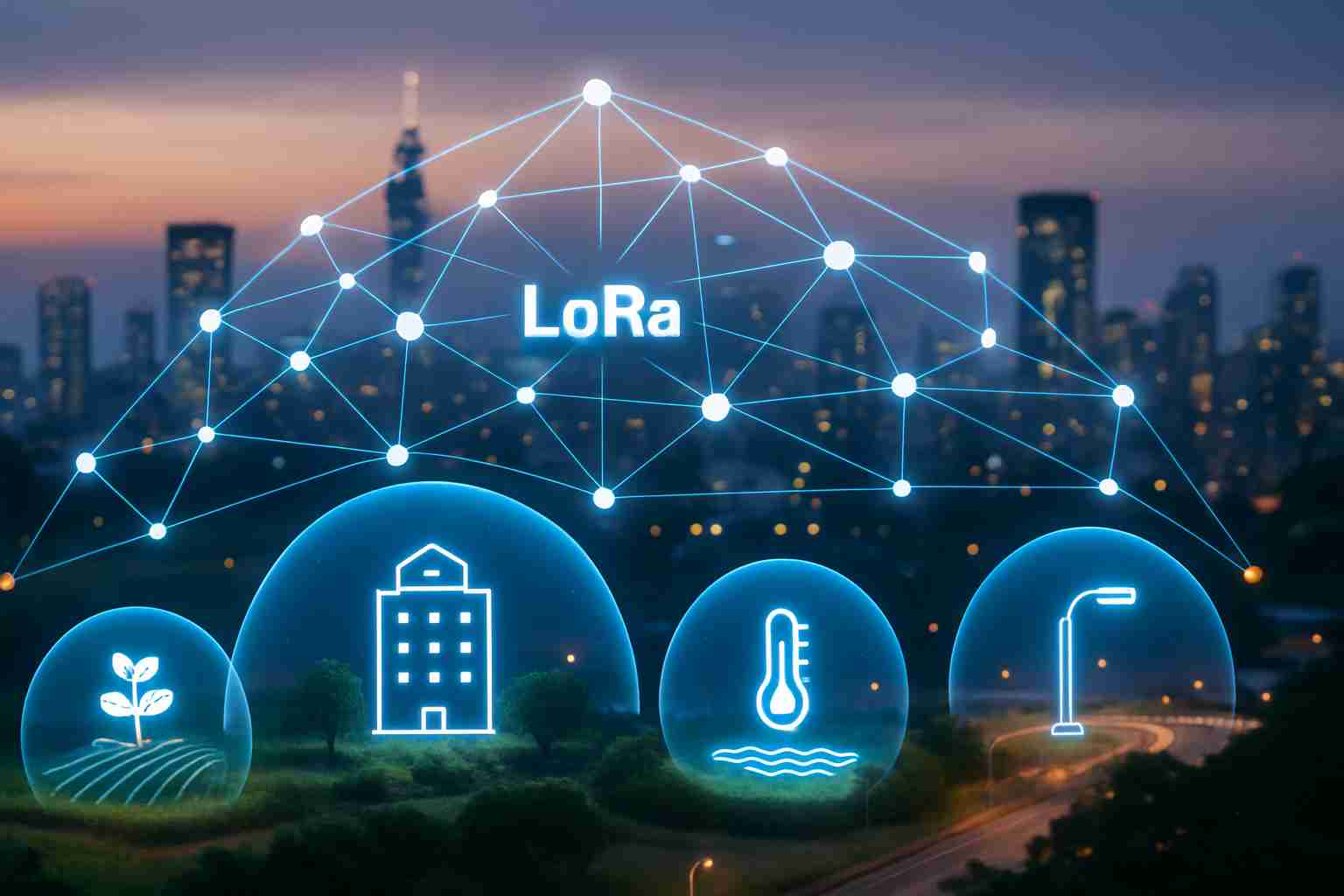
Successful real-life implementations demonstrate the impressive LoRaWAN network expansion capability. For instance, metropolitan areas controlling smart streetlights and industrial environments tracking machine condition utilize LoRaWAN’s broad reach and sturdy protocol. These case studies underscore the network’s ability to underpin large IoT ecosystems without sacrificing performance. Consequently, LoRaWAN is a preferred option for expansive IoT projects, delivering notable LoRa mesh network advantages in both city and industrial settings, boosting connectivity and cutting operational expenses while guaranteeing dependable data communication.
Advantages of Mesh Networking
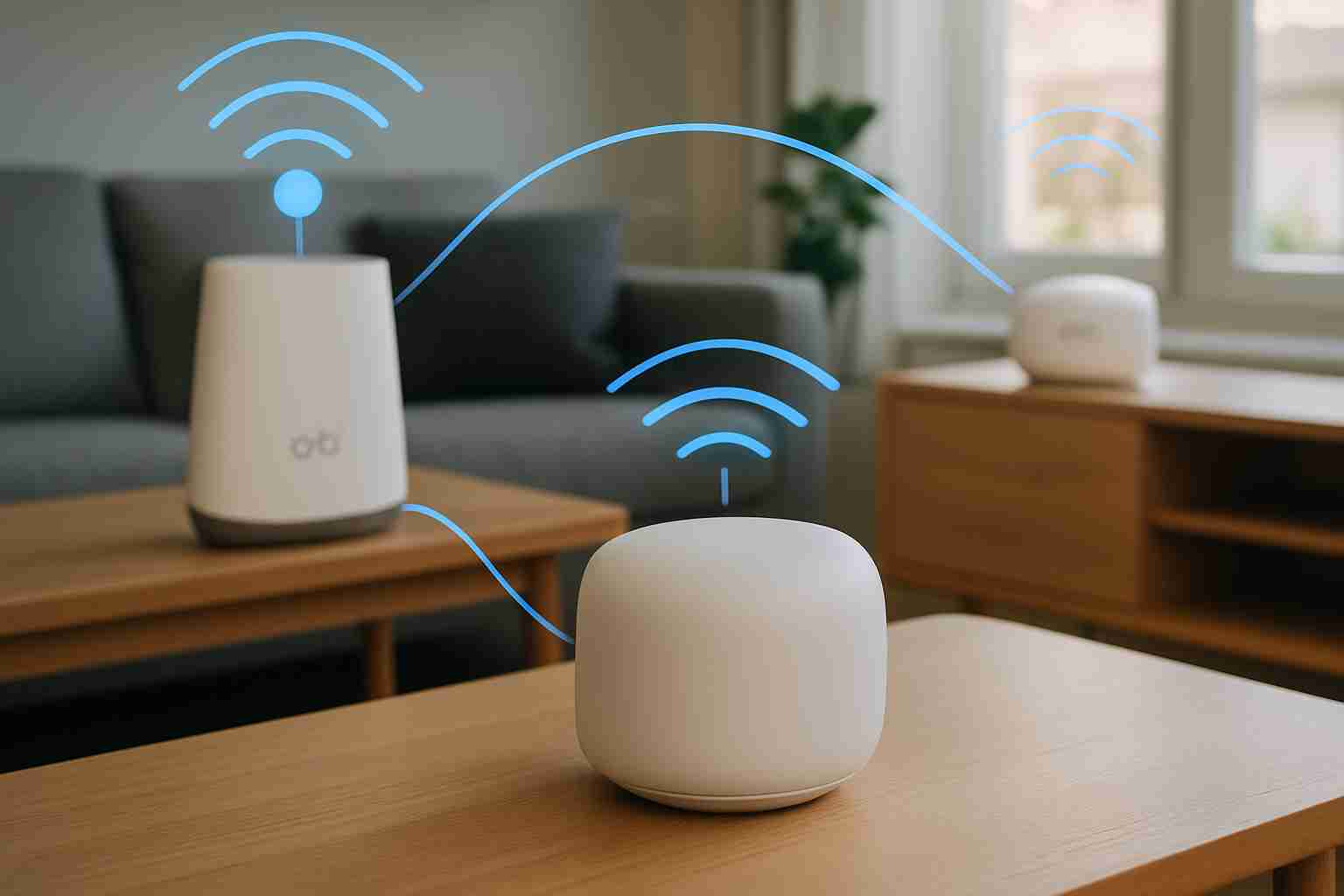
The dynamic self-organization and self-configuration features of mesh networking make it an exceptional choice for modern Internet of Things communication standards. By enabling devices to interact either directly or through intermediate nodes, mesh networking forms a sturdy and adaptable communication framework. This design guarantees that the network can self-heal by redirecting data via alternative routes if any single node fails. Such fault tolerance plays a vital role in the dependability of mesh networks, especially in scenarios where uninterrupted connectivity is essential.
Because of this autonomous mesh network property, maintenance expenses drop considerably, reducing the need for manual upkeep. In extensive deployments like intelligent city mesh connectivity or industrial Internet of Things connectivity, this results in lowered operational expenditures and less system downtime. Mesh networks promote resilient IoT data communication, ensuring smooth information flow even under challenging circumstances.
LoRa mesh network advantages also encompass improved device redundancy, an essential feature for use cases where communication failure or data loss is unacceptable. This ensures the network remains functional and efficient despite individual node outages. Further, LoRa mesh network advantages extend to support a multitude of IoT communication frameworks, from agritech innovation to urban infrastructure, positioning them as a cornerstone in the evolution of connected technology.
Enabling Resilient, Low-Power IoT Communication
LoRa mesh network advantages provide a robust communication structure for IoT by effectively combining low energy consumption with reliable data delivery. As a fundamental part of low-energy wide area network (LPWAN) technology such as LoRa, these systems minimize power use while sustaining strong connectivity over large distances. This blend proves essential in environments like smart cities, where network reliability and energy conservation are both priorities. Utilizing LoRa mesh networks innovatively permits devices to exchange information across wider regions, with each node capable of forwarding data through several routes to boost dependability. Such versatility means if one connection is interrupted, other paths preserve communication, much like a self-healing mesh network. This resilience improves network stability, guaranteeing continuous function across diverse conditions. It plays a critical role in urban applications where many linked devices require uninterrupted data exchange. Ultimately, LoRa’s ability to facilitate cost-efficient energy use while ensuring consistent, extensive communication highlights its significance in propelling resilient, low-power IoT solutions suited for contemporary cities and beyond. The emphasis on reduced power demands paired with broad operational coverage illustrates how the benefits of LoRa mesh networking make IoT practical and reliable in energy-conscious, large-scale deployments.
Creating Cost-Effective IoT Solutions with LoRa
In the world of IoT, the mesh networking benefits of LoRa open unique avenues for budget-friendly IoT platforms. Compared to conventional cellular or wired configurations, leveraging the LoRa and LoRaWAN framework drastically lowers infrastructure costs. With its low power consumption combined with extended range energy-efficient communication, networks can be established in distant or large-scale areas without relying on costly power resources. This adaptable IoT framework allows for seamless network growth as business needs change, thereby reducing the risks tied to initial capital outlays.
For agricultural enterprises and small-scale businesses, the financial advantages of implementing LoRa-based IoT communication platforms become clear through decreased operational expenses. These systems present an appealing budgetary option thanks to fewer physical parts and diminished maintenance requirements. Moreover, the built-in energy optimization aligns with eco-friendly IoT devices, supporting sustainable business practices. By creating more accessible entry points into IoT, LoRa technologies enable various industries to tap into smart device connection solutions without significant financial strain, fostering innovation and flexible operations. This crucial transition democratizes IoT potential, making cutting-edge solutions attainable even for modest ventures. Effectively, the incorporation of mesh networking benefits is transforming the economic playing field for Internet of Things network solutions.
Conclusions
By transforming the landscape of Internet of Things communication standards, LoRa and LoRaWAN provide expandable IoT platforms that combine energy-efficient wide area networking with budget-friendly IoT platforms. These technologies present a sturdy framework for various applications, thanks to their resilient mesh networking advantages. As the IoT ecosystem expands, harnessing the potential of long-range low consumption connectivity will be vital for efficient, sustainable IoT device networking, facilitating smooth integration into smart cities and other advanced environments.