
Unlocking the Future with Real-Time Location and GPS Technologies
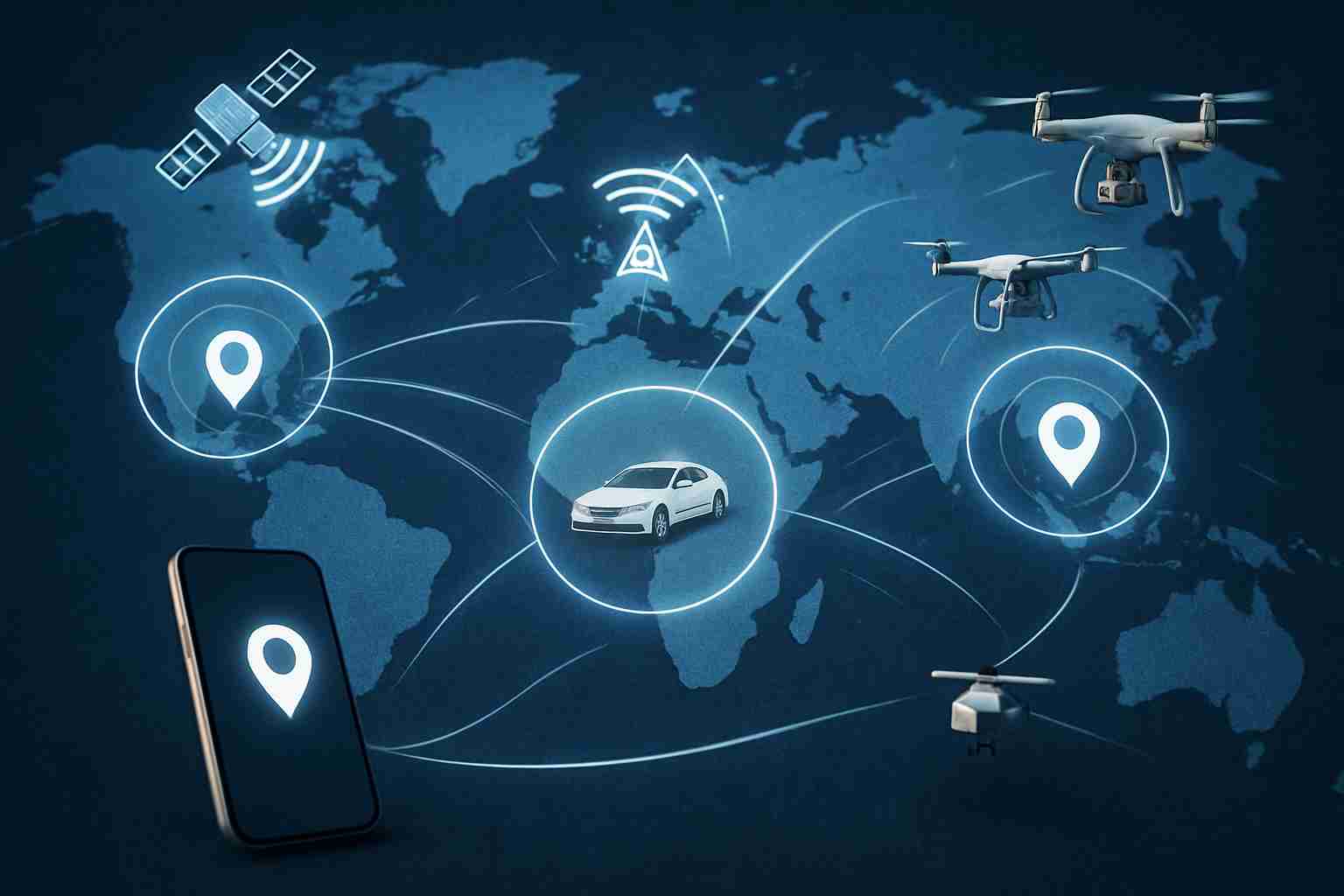
In today’s advanced world, real-time location tracking and GPS technologies have transformed the way we find our way and engage with our surroundings. These technologies profoundly influence our everyday lives, from enhancing shipment tracking solutions and boosting security to driving innovative geotargeted marketing approaches. This article delves into their practical uses, the breakthroughs behind these innovations, and what they mean for the future.
Demystifying Real-time Location Tracking Systems
In today’s fast-paced technological world, real-time location tracking systems, commonly known as RTLS, have become essential across multiple industries. Utilizing technologies such as RFID and Wi-Fi, these systems automatically monitor the movement of people and objects as it happens. Providing continuous updates, they are revolutionizing sectors by improving operational workflows and elevating customer experiences.
Picture a busy medical center: real-time location systems for healthcare optimize processes by following medical tools and patients, guaranteeing prompt treatment and resource readiness. In the realm of logistics, shipment tracking solutions ease inventory control and enhance supply chain efficiency by delivering exact whereabouts of goods while en route. Retailers leverage RTLS technology to study customer foot traffic, manage inventory levels, and tailor shopper interactions by tracking in-store navigation.
Real-time location tracking is also crucial for boosting workforce efficiency, ensuring staff and assets are positioned correctly. This trimming of wasted time and resources leads directly to higher productivity and cost reductions. As these platforms advance and merge with other innovations, their scope widens endlessly. From strengthening safety measures to transforming user engagement, RTLS remains at the cutting edge of technological progress.
Harnessing the Power of GPS for Advanced Tracking
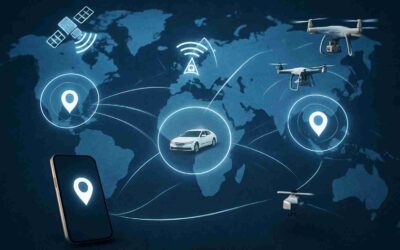
The transformation brought by advancements in GPS technology has profoundly impacted diverse industries, delivering a technological leap in tracking vehicles, assets, and people with remarkable precision. By leveraging satellite signals, these gadgets determine exact positions, offering worldwide coverage essential in our fast-moving era. Integrated seamlessly with geo-targeting solutions, GPS tracking creates virtual boundaries that activate location-based alerts when breached. This integration is notably revolutionary in sectors such as fleet management, where firms depend on it to oversee and enhance routing, thereby boosting efficiency and cutting expenses. In wildlife preservation, animal GPS tracking equipment assists in monitoring motion patterns, supporting the study of behaviors and safeguarding threatened species.
The advantages of GPS tracking technology are abundant, providing instantaneous GPS tracking solutions and global reach, which highlight its usefulness across numerous domains. Through real-time location tracking features, companies can supervise logistics, guaranteeing adherence to operational protocols and elevating client satisfaction. As global positioning tracking systems grow more advanced, they deliver increased accuracy alongside minimized errors. The partnership between GPS and geolocation software not only strengthens GPS-driven security reinforcement but also amplifies operational productivity dependent on exact positional data.
Innovations in Live Location Monitoring
In the evolving digital realm of today, real-time location tracking has become essential for overseeing movement within our ever-changing ecosystems. Thanks to advancements such as mobile device location technology, continuous data streams enable precise identification of individuals’ whereabouts. These solutions operate nonstop, supplying ongoing updates that improve both operational efficiency and user convenience. Nevertheless, the ethical challenges and privacy issues linked to real-time location tracking demand a careful equilibrium. Upholding data protection and fostering clear consent are crucial to maintain trust and prevent intrusive observation.
Still, the significance of live GPS monitoring is especially evident in urgent incident location services and personal security contexts. Whether directing emergency responders to an exact location during crises or reassuring users through personal safety apps, such systems have become vital. Delivering instant and accurate location information can safeguard lives and provide protection in hazardous situations. As innovation in GPS technology relentlessly progresses, it is critical that we embrace these advancements with responsibility and ethical mindfulness, maximizing their advantages without undermining individual privacy.
Understanding the Dynamics of Geofencing
Geofencing technology functions by creating invisible digital borders around designated geographic locations. Its flexibility comes from the ability to initiate alerts or actions once a device crosses into or leaves these set boundaries. When applied in marketing, geofencing enables geo-focused promotional strategies that send offers or notifications straight to users’ devices as they enter or near a specific place, such as a retail outlet. For companies, this technology allows automated workforce time management by recording clock-ins and outs as personnel arrive or depart from the site. In security surveillance, geofencing boosts monitoring by issuing location-based alerts when unauthorized entry happens within guarded zones, strengthening crime deterrence.
Organizations use geofencing to heighten customer interaction and optimize processes by tailoring experiences through location data. Nonetheless, challenges like keeping geofence borders accurate and minimizing GPS inaccuracies remain. To tackle these, advanced algorithms improve GPS positioning accuracy, while combining Wi-Fi positioning system or Bluetooth signals offers additional location verification. As this technology advances, grasping its operational mechanics enables firms to leverage this cutting-edge tool efficiently, improving customer engagement and operational workflow while mitigating its constraints.
Location-based Services and Their Role in the Digital Age
In today’s digital landscape, location-based services (LBS) have become essential, flawlessly merging with mobile technology to shape our everyday routines. By delivering timely details pertinent to a user’s exact position, these geolocation services create uniquely tailored mobile user journeys. Consider navigation apps as a clear example; they provide step-by-step guidance, live traffic conditions, and highlight local points of interest. Real-time location tracking plays a crucial role in proximity marketing, enabling businesses to reach potential customers with promotional messages exactly when they are in the vicinity.
Additionally, personal assistant tools leverage the capabilities of LBS to offer handy tips and reminders based on where users are. For example, a prompt to grab groceries when passing a store not only boosts convenience but also streamlines daily tasks. The ubiquity of smartphones and IoT geolocation services puts these benefits directly in our hands, reshaping consumer expectations and engagement.
The influence on consumer purchasing analysis is significant. Companies adopt geotargeted marketing approaches to distribute customized content aligned with users’ locations and preferences. This strategy enables more efficient marketing spending, enhances loyalty, and strengthens customer interaction. As geolocation services progress, real-time location tracking continues to be a potent resource, propelling innovations focused on consumers and fostering strategic business expansion.
Conclusions
Innovations like live GPS monitoring and real-time location tracking systems serve as fundamental breakthroughs that are revolutionizing various sectors while boosting everyday convenience. Whether it’s enabling smooth navigation, powering geo-focused promotional strategies, or supporting GPS-driven security reinforcement, these cutting-edge GPS developments hold vast promise. By grasping their diverse uses and addressing potential obstacles, we can unlock smarter, more integrated ecosystem technologies for the future.