




Exploring Meshtastic GPS and LoRa Mesh Networks for Off-Grid Communication
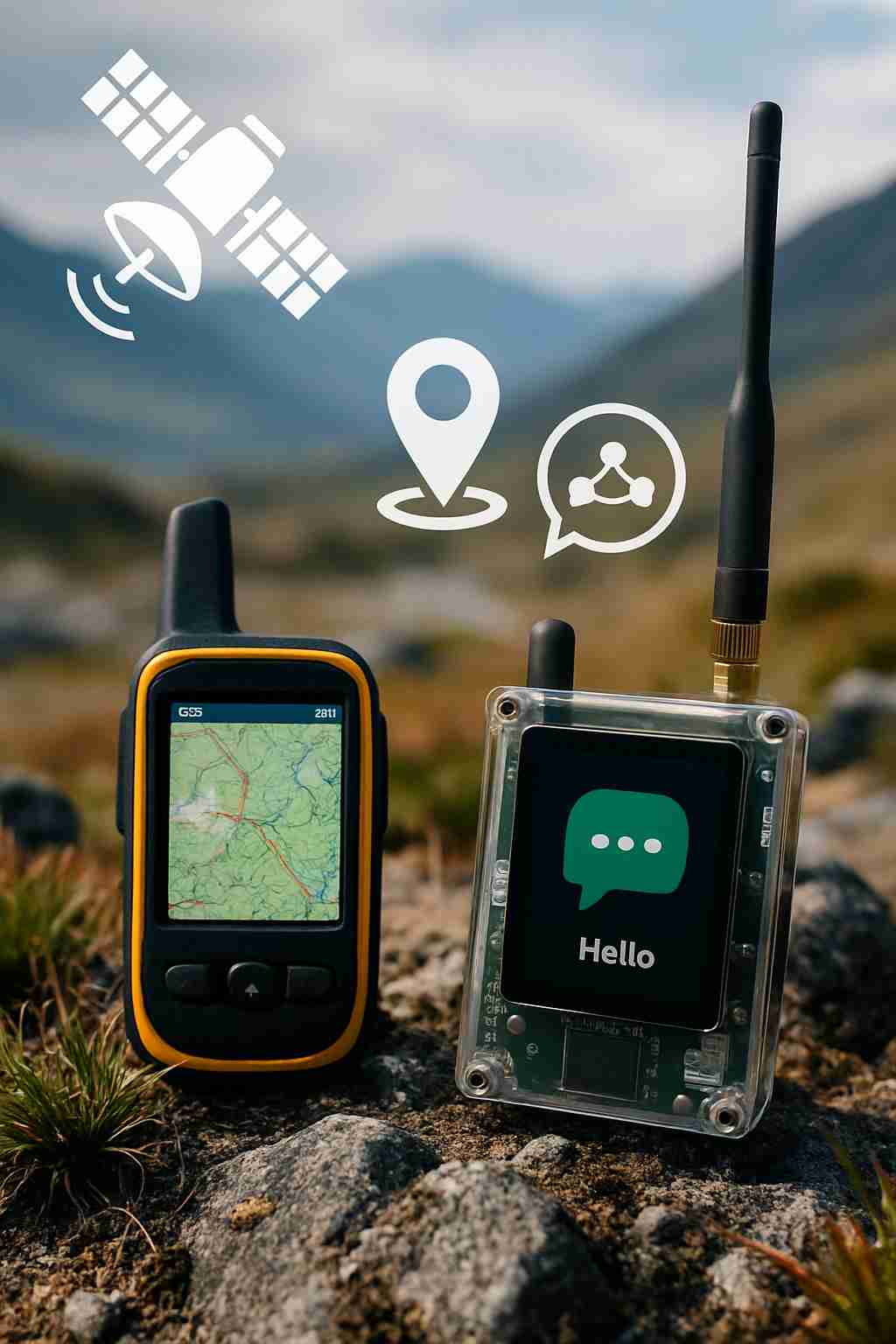
Connectivity has become essential in today’s world, making autonomous communication devices like Meshtastic GPS, LoRa mesh networking, and GPS-enabled gadgets vital. These innovations guarantee smooth connections in isolated region communication systems and during crises, ranging from distributed communication platforms to broad-range wireless communication. This article explores how such progress influences the future of communication landscapes.
The Power of Meshtastic GPS in Off-Grid Communication
Meshtastic revolutionizes our perception of communication in remote settings by combining GPS functions with its distributed mesh network architecture. The breakthrough of meshtastic gps guarantees that users can accurately determine their positions even where conventional networks are absent. For hikers, explorers, or disaster response teams requiring trustworthy geographical coordinates without internet access, this feature proves indispensable. By utilizing GPS monitoring, every node within the network acts as a reference point, continuously updating and sharing its location across the mesh. This creates a resilient network of spatial information, empowering more informed decisions during emergencies.
What distinguishes meshtastic gps is its foundation on a collaborative community spirit. With contributors worldwide enhancing the platform, it supports a wide range of uses—from aiding the Mars Society’s remote trials to optimizing team communication on outdoor missions. Leveraging LoRa wireless GPS tracking technology, Meshtastic achieves impressive message or location signal ranges at very low power consumption, making extended use sustainable. As the need for dependable communication in isolated environments intensifies, Meshtastic GPS is poised to grow, securing its role in the evolution of standalone communication systems.
Understanding LoRa Mesh Networks and Their Advantages
LoRa technology transforms communication by enabling broad-range wireless communication with minimal power expenditure. At the heart of this breakthrough is LoRaWAN, the protocol managing communications within Internet of Things (IoT) frameworks. Unlike conventional networks, LoRaWAN shines in delivering wide-area wireless connectivity across distances as far as 10 kilometers in rural environments—while keeping energy consumption exceptionally low, which makes it perfect for IoT applications. Its geolocation features remove the reliance on GPS in many instances by employing signal triangulation to accurately locate devices. This is especially vital across industrial, agricultural, and smart city sectors. Industrial applications benefit from LoRa’s dependable connections to oversee remote sensors and machinery. Meanwhile, farmers use it to efficiently monitor crop conditions and livestock activity, and smart cities deploy it for utility and infrastructure management. The strength of LoRa also lies in its ability to traverse physical obstructions, ensuring robust connectivity even within dense urban locales. By focusing on power-efficient, long-distance transmission, LoRa plays a crucial role in supporting a variety of applications, boosting connectivity previously considered unattainable. This capability highlights the importance of advanced solutions like meshtastic gps, which enhance autonomous communication devices in off-grid scenarios.
Leveraging GPS-Enabled Devices for Seamless Navigation
Global Positioning System (GPS)-enabled gadgets have become indispensable for navigation and communication, particularly in remote area scenarios. By utilizing satellite-based positioning, these tools deliver accurate geolocation services vital to both civilian and business uses. Initially developed by the U.S. Department of Defense in the latter part of the 20th century, GPS technology has continuously evolved, establishing itself as a fundamental element of current navigation systems.
Among the advanced uses of GPS technology are communication devices that incorporate systems like meshtastic gps, allowing for precise tracking and sharing of locations even in isolated environments. This fusion enhances performance by boosting the accuracy of user positioning and message transmission, which is especially crucial during hiking trips where conventional signals might weaken. In complex supply chains, GPS plays a key role in asset tracking, streamlining delivery routes and increasing overall operational efficiency.
The advent of GPS-enabled technology has transformed how individuals and companies traverse their surroundings, offering a dependable and uninterrupted stream of location-based data. This fusion advances the capabilities of long-range, decentralized communication frameworks, closing connectivity gaps in otherwise difficult terrains. Platforms like meshtastic gps demonstrate these progressions by combining satellite precision with novel, standalone communication devices.
Decentralized Messaging: A Necessity in Modern Communication
In today’s world, where communication plays a vital role in everyday life, distributed communication platforms stand out as symbols of reliability. Technologies such as Bitchat leverage peer-to-peer messaging networks to maintain the authenticity of messages without depending on a centralized internet architecture. Such decentralization proves essential during network failures, censorship efforts, or any disturbances affecting conventional communication channels. Consider, for example, meshtastic gps integrated systems—they combine geolocation technology with messaging functionalities, boosting connectivity even in isolated areas. These systems, at their foundation, incorporate secure messaging platforms with strong encryption, ensuring user privacy and safe communication even amid emergencies. Their strategic edge is found in the ability to establish adaptable mesh communication protocols that operate independently of existing infrastructure. This autonomy guarantees message flow continuity during significant events or crises when traditional networks are overwhelmed. Under such circumstances, solutions based on meshtastic gps offer a reliable alternative, fostering resilient and autonomous communication pathways and maintaining seamless interaction in an increasingly interconnected world.
Long-Range Communication: Expanding Horizons Beyond Infrastructure
In areas where conventional infrastructure fails to reach, extended-distance wireless transmission methods such as LoRa mesh networking offer vital connectivity. By avoiding the constraints inherent in cellular systems, these technologies deliver dependable communication even in the most remote spots. When paired with mesh networks, LoRa facilitates a distributed communication platform that is both resilient and efficient. Known for its minimal energy use and remarkable reach, LoRa works hand-in-hand with mesh connectivity solutions. This synergy enables messages to navigate challenging landscapes, hopping node to node until they arrive at their endpoint.
The convenience of Bluetooth in these networks lies in its ability to effortlessly link devices to the system. A prime example within this framework is the meshtastic gps, which harnesses these innovations to maintain user connectivity in off-grid scenarios. These setups have been effectively deployed across various situations, ranging from natural disaster areas—ensuring seamless rescue communications—to expeditions in harsh, isolated environments. By removing reliance on traditional infrastructure, these technologies transform how communication flows, guaranteeing continuous information exchange regardless of geographical or infrastructural obstacles. Within this emerging frontier, devices like the meshtastic gps carve out their role by enabling users to remain connected beyond conventional limits.
Conclusions
Meshtastic GPS and LoRa mesh networking demonstrate the revolutionary capabilities of distributed communication frameworks that support broad-range wireless communication. By integrating GPS-enabled instruments and adopting cutting-edge protocols, these innovations provide reliable autonomous communication devices. They are transforming connectivity paradigms by addressing infrastructural and geographical obstacles, ensuring dependable communication channels during disasters, in isolated region communication systems, and across a variety of sectors.